
Agentic Commerce's biggest hurdle is a human problem... yes, it's often us....
It takes a mix of new habits, dopamine and infrastructure to make agentic commerce a reality but so much has to change and needs to be invested to make it successful.

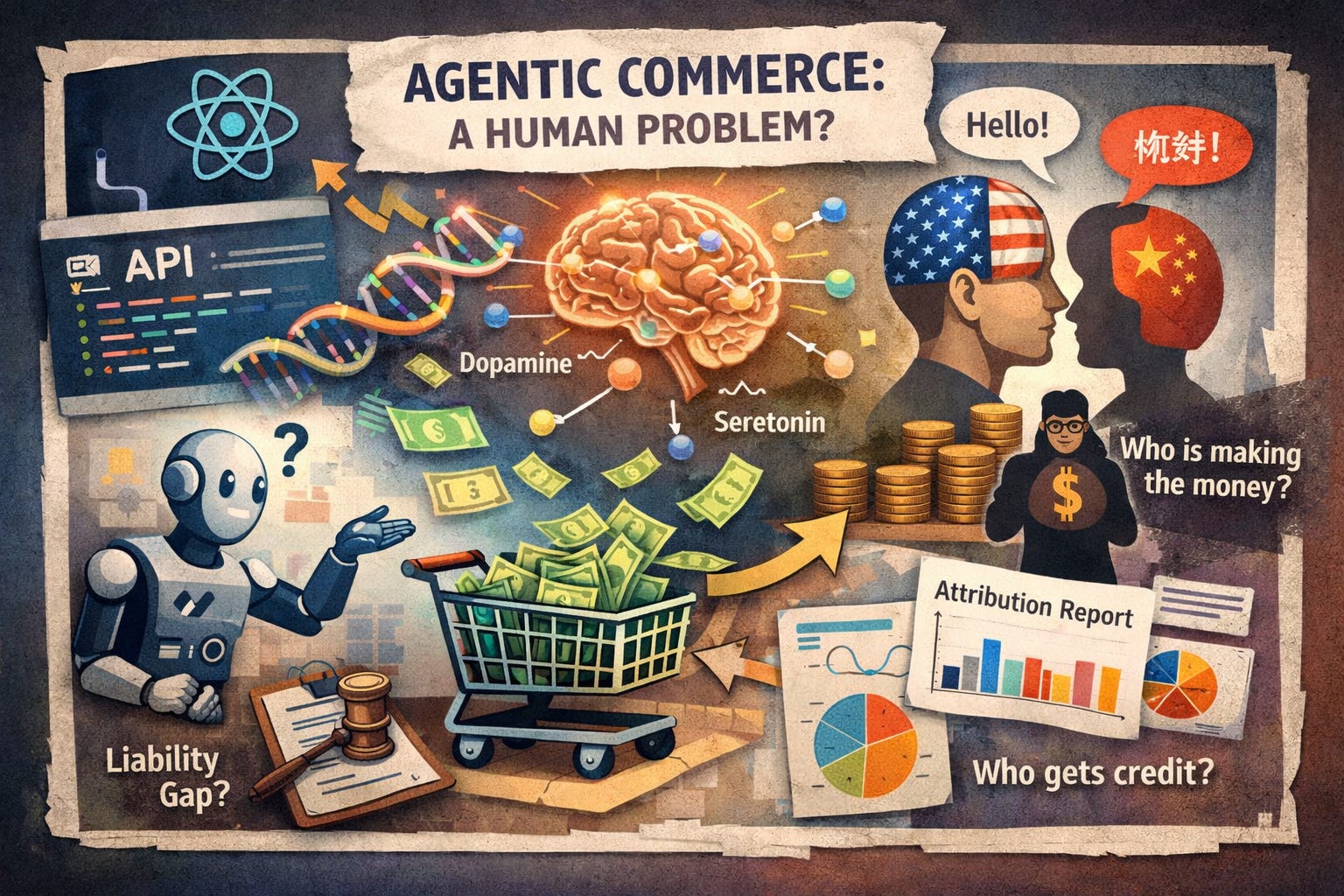
This article was inspired by the amazing Purna Virji, who published an article last week about the habit problem in Agentic commerce , which you should read because I think she is right about the verification tax and how creating new habits is required for Agentic commerce to succeed. The article sparked a chain of thoughts and questions in my head. Yes also I’m aware in the picture above the chinese script reads Willow Sister! instead of saying hello… another danger of relying on ChatGPT without checking output.
I wondered about infrastructure, which I want to dive deeper into, the aspect of sparking joy which agentic commerce reduces and can agentic commerce give the same level of comfort or dopamine to shoppers?
There is also the further question does it impact high/low involvement decisions first?I forecast that the first area where agentic commerce might gain some traction is in routine purchases like finding the best price for recurring purchases like toilet paper or dishwasher tablets that can have significant variance in price linked to store promotions but traction is less likely with large purchases like a car or a house. But looking at what is shared on social media, it appears that people are testing AI agents to do more complex tasks like booking vacations or applying for hundreds of jobs.
But first things first. What is an AI agent and why should I care?
The short answer is AI agents are autonomous programs that can act on behalf of a user to complete complex multi-stage tasks. AI agents are likely to have the biggest impact on white-collar jobs and specifically young professionals but if companies don’t adapt to using AI in workflows they might be replaced.
Agentic Commerce or AI assisted retail is moving digital purchases from manual searching and comparisons into a complex purchase cycle that can find suitable products, negotiate the price and finalise a purchase without any human involvement. The topic of Agentic Commerce seems to be keeping the C-suite up at night and causing some panic among retailers and brands along with Infosec teams who have a whole new type of potential fraud happening within their systems. Also I see that people are already mixing up Agentic AI, AI Agents, GEO commerce, AI commerce and Agentic Agents so don’t stress if you are confused most people seem to be on this topic. At a recent DEPT Future Club event they shared a very cool perspective of a world in the near future where Agents will talk to each other. Your personal AI assistant will engage between brand and platform agents that would in a future state progress to autonomous agents with little or no human input.
Are infrastructure limitations on legacy systems lacking APIs holding back agentic growth?
APIs are not new but often they don’t run on all systems and are not always publically accessible. Also the web, while more advanced and dynamic than it was a few years ago, is still a fairly static environment. For Agentic commerce to progress, API’s have to be significantly improved to enable ai-driven automation with non-API enabled legacy systems. Headless CMS platforms like ContextStack may offer some of the API-first infrastructure that agentic bots will need to succeed but it still requires a lot of Human-in-the-loop (HITL) to ensure brand success. HITL can speed the learning and increase the accuracy of the model, correct errors, handle more complex topics and reduce risk profiles. This can be something as simple as ensuring all your content is correctly translated to local market requirements. Ensuring legitimate agentic bots have access to your API feed and bad actors (scammers/spammers) are blocked is an important part of HITL.
For Agentic commerce to succeed companies and brands need to ensure key legacy systems have at least a basic API feed for product information. While this seems like a elementary step it’s a huge leap forward in making the web more accessible to AI agents. It is key that brand teams ensure content is correctly localised/translated because this can increase not only conversion rates accuracy for agentic commerce but allow for increased cross-border trade.
Could infrastructure limitations on JS heavy framework like ReactJS hold back agentic growth?
Too many times I’ve been told by developers that Googlebot is smart enough to work it out… they build heavy ReactJS websites on £5k Macbook Pro devices with 1GB/s internet connections and don’t think about (life/systems/capacity?) outside the office walls. It’s not just Googlebot that struggles, (it can mostly) crawl JS heavy websites, most AI bots refuse to render JS as it is just too expensive for them. The outcome is AI bots taking the bare minimum bits of information from your website and moving on. Where this becomes more important for agentic commerce is that pages are queried often in real-time so (bots?) don’t have time to do post-crawl processing of JS to read the text on the page. This compounds the problem because the AI agent can incorrectly read the pricing information when many websites use dynamic signals that affect booking prices such as iOS vs Android users which may not be an easy fix for online marketplaces or retailers. Load time is another factor that AI agents might struggle to balance, I still find examples of pages taking more than 30 seconds to load which is not acceptable to either users or bots.
For success at least check that your content is visible to Googlebot and most popular AI bots if they don’t enable JavaScript. Furthermore, there is no reason any website should take more than a few seconds to load so get this fixed. For legacy platforms consider options like CloudFlare who are trying to address this with Markdown for Agents that can reduce token usage by 80% as newer AI bots and LLMs that struggle to understand your website content.
Can infrastructure limitations on agent-initiated transactions increases agentic commerce friction for adopters?
A number of the world’s leading payment providers and banks have spent the last decade increasing their fraud protection tools and 2FA features such as in-app approvals, sms or voice confirmation. Sure some AI agents could clone your voice, read your phone messages or even open the banking app for approval but this may break your terms of service with your bank or card provider.
An early safeguard with AI agents was to provide them with a virtual or pre-paid card but more and more platforms have stopped virtual cards from being used as they don’t support recurring payments, cannot do authorisation holds or can be used for fraud. NS is one of likely a growing number of transport providers that are being taken for a ride as commuters disable the virtual card before the fare is debited.
Mastercard still sees the HITL (human-in-the-loop) approval flow as key to prove intent to make the purchase. And how do you ensure the AI agent’s guardrails are correctly defined and you don’t accidentally end up with 10 x $10 pairs of jeans as they were marked down by 90% when you set it a budget of $100 or with the wrong size because you used the metric measuring system and the AI agent used imperial. AI agents have shown they are terrible at managing money so far so why would consumers trust them to do a better job?
The current rules that are in place for transactions need terms & conditions changed to allow for AI agents to legally act on your behalf. Some of these can be as simple as AI agents being having pre-agreed values put in place along with limits of frequency of purchases to prevent edge cases when they buy 100x the amount due to a typo. For Agentic commerce to flow smoothly current 2FA will need to be adapted but also guidelines what trusted payment gateways or websites the AI agent is allowed to use for purchases. Also I see that virtual credit cards are not the scalable solution for AI agents yet so maybe a use for blockchain to handle payment and authentication could work.
CloudFlare have a vested interest in making this work but it (what?) is important for large retailers, marketplaces, media houses, coupon & comparison websites and OTA (online travel agents) where content owners charge AI crawlers for access. Agentic commerce has a hidden and potentially massive cost to those feeding the beast. Websites were typically setup for users that viewed a single page at a time but one single user deploying an agentic agent can now potentially consume hundreds if not thousands of pages of content simultaneously. AI agents have the potential to cost data providers and content owners millions more in traffic costs and server upgrades to keep up with the demand.
Previously, many of these sites monetised these pageviews with ad impressions and often used affiliate models to monetize the product clicks, but with agentic commerce no ads are loaded (this saves AI platforms money) and any referral parameters or cookies dropped are discarded.
The question to be asking is who is making money running Agentic commerce is not going to be free or stay cheap forever so how are consumers and brands budgeting for AI agent costs?
More websites will likely go with block all bots and opt-in those trusted platforms who are not playing by the rules. Amazon who is leading the charge on AI has already blocked at least 47 AI crawlers and sued Perplexity to stop it’s AI agents shopping on behalf of its own customers. Larger media players and content owners might have enough weight to adjust the rules such as exclusive access or unique coupon codes for a handful of the largest AI agents. The pay-per-crawl micropayment option seems like a possible solution but this requires the AI agents to value the content enough to pay.
What about infrastructure limitations for 100% digital processes?
The current legal framework for a large number of higher priced items like cars or houses don’t have a standardised or consistent framework for a 100% digital process. For example, in Australia PEXA offers a digital e-conveyancing settle option for buying property. The conveyancing option for settling property transfers are more restrictive in Tasmania, Western Australia and Northern Territory. Banks still often require wet ink on paperwork (ie human signature) which can’t be done by an AI agent or online. A lot of legacy systems are not setup to work with AI agents due to security but also limited or non-existent API frameworks.
Ask yourself, how much of your existing customer journeys can be completely digital?
A huge amount of money needs to be invested in infrastructure to allow more to be done via APIs by banks. For consumers, the solution might be as simple as moving to a digital first bank that has the APIs already made available for agentic commerce to happen. There also needs to be legislative change to allow for agentic commerce to legally happen and companies would be required to change to open APIs.
More infrastructure limitations - AI doesn’t always have all the answers because the data wasn’t provided
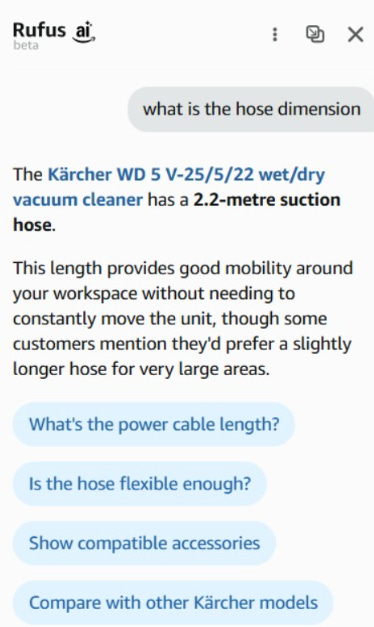
My initial personal experience with Rufus on Amazon has been basic at best with many of the attempts resulting in answers that miss the mark and don’t assist with the purchase journey. My most recent test proved to be of limited value when asking what is the hose dimension of a particular Kärcher shop vac that I was looking at. There are two parts to this failure point
Kärcher hasn’t defined this information on the Amazon ASIN so Rufus has no reference point and doesn’t seek external data sources
I am a human and talk like one but should I have used the specific language of inner diameter, outer diameter, bore or hose sizing? My word use still seems to throw AI off at times.
One of Google’s case studies on the use of AI and GCP is with Home Depot so I tested the same question and found that it was able to correctly answer my question. But again what was missing from my shopping experience was the human element… the related follow-up prompts you might expect such as are you searching for compatible accessories or something else?
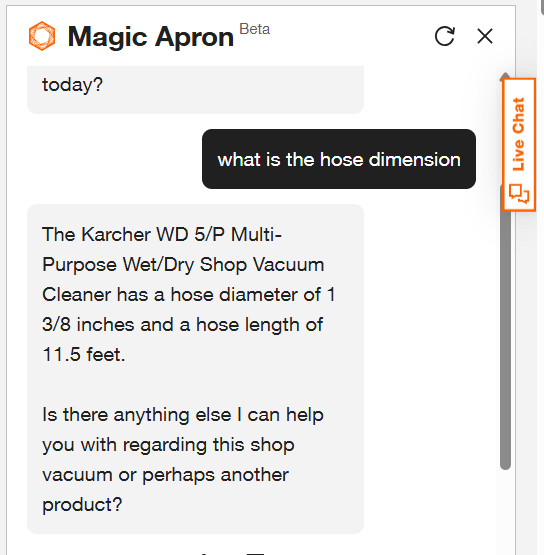
Why would the Amazon purchase have failed if I used AI? I was looking to ensure I bought the correctly sized extension hose for this specific model at the same time. So had I been using a platform specific agentic bot there is a chance that it would have failed in it’s journey as it could never know the answer of hose dimension required searching outside it’s own ecosystem.
There a few ways that business can start to ensure they are setup for success with AI chatbots and agentic commerce is making sure full product details are made available in a structured format AI agent can query. If you are using a platform specific agentic agent ensure that it can query trusted sources such as manufactures websites or approved PDF resources to feed the gaps in knowledge.
Agentic commerce may shift place of purchase away from preferred retail partners or locations
There is certainly a valid use case for agentic commerce to do the heavy lifting to find where to buy the product once they have made a decision. Trying to find out which store within X miles has your desired product in stock or on special is soul crushing at the best of times without a tool like an AI agent.
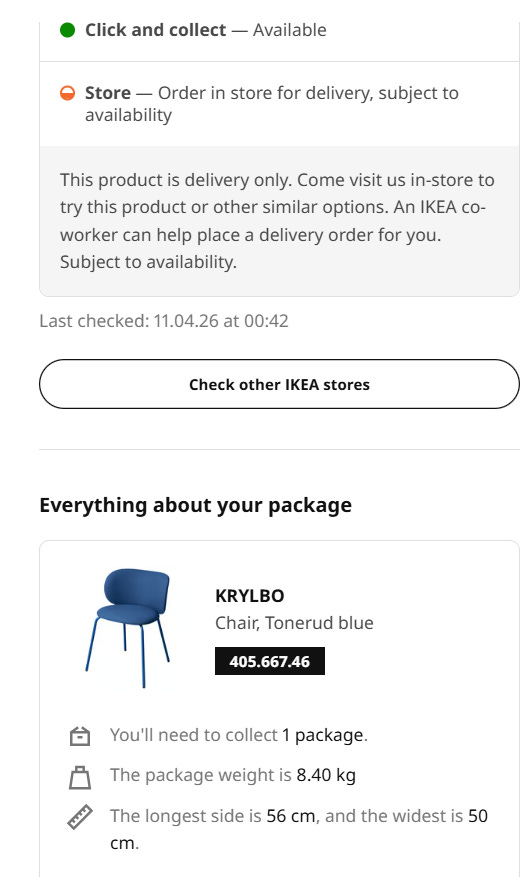
There are two examples of this, the first fictional example is one of your IKEA dining chairs broke and you need a new one urgently. You are based in Notting Hill so you have the option of 3 locations Wembley, Oxford Street and Hammersmith.
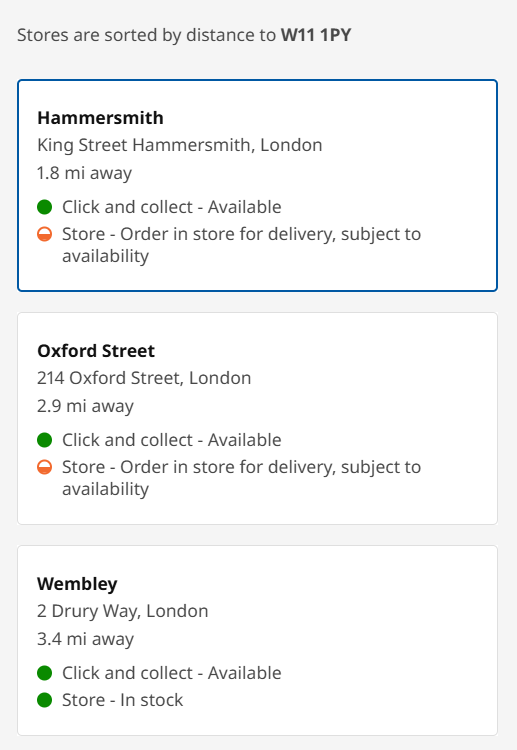
The upside is that IKEA is reasonably advanced when it comes to ecommerce in a lot of markets where they operate. They give you or the AI agent most of the information they need to check availability, also confirm store opening hours but also details of the package so you can make the decision that is, while awkward, could be transported on a London Bus or the Tube. But the question is, if all the information shown in the browser is accessible from an API your AI agent needs to access. Also a retailer may have a preference for this consumer buy from a specific store location due to stock availability or ease of restocking items or a preference for click & collect but agentic commerce may shift this power back to the consumer. There is also the added layer of complexity between franchise and company owned stores that AI agent’s could help navigate for consumers.
The second fictional example is your Sony Bravia 4K OLED TV breaks a couple of hours before your friends are due at your place to watch your team in the final. From a consumer perspective you just want to buy the same or a similar sized TV as quickly as possible and you don’t care where you buy it. An agentic commerce model may find that B&H is open now and has the best range and prices but your AI agent calculates with manufacturers rebates available only in store from Adorama you should probably look at their Samsung range in person. Most brands have a set of preferred retail partners but agentic commerce may shift that balance in favour of generating the sale. The AI agent does give consumers the potential to constantly find the best deal and for brands that massive marketing promotion with Best Buy is never seen by the consumer as their agent doesn’t view the onsite ads.
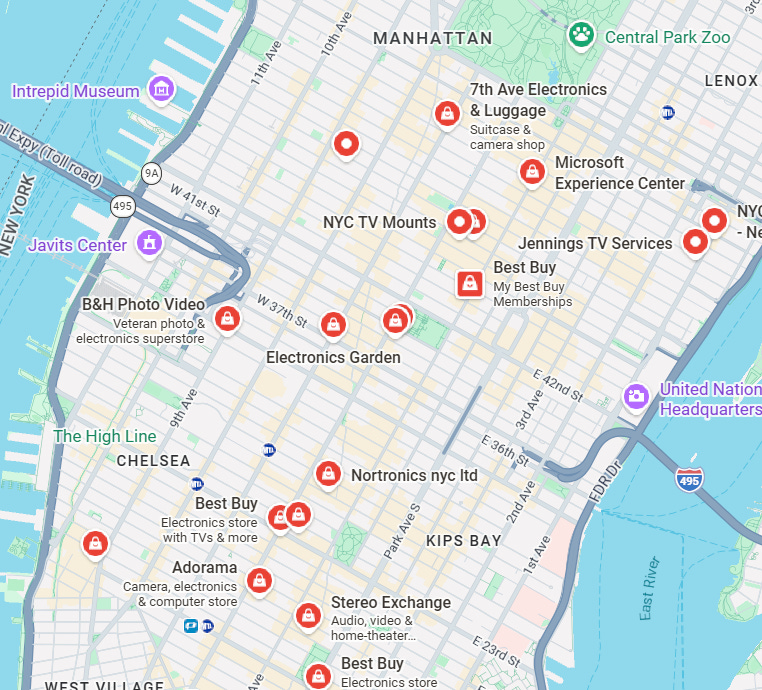
For brands it is essential to start to understand more about your real-time stock availability and be able to feed this information in a structured format back to AI agents. Ideally there could be logic based on the location of the consumer if disclosed but also the dimensions of the product, the urgency of the purchase and the accessibility of the location. There are also the details such as expected delivery windows, store opening hours and similar options so you don’t miss out on the sale. Another consideration is that offline and online promotions need to be more closely aligned and this information made available as AI agents aren’t going to visit a physical store anytime soon.
Attribution lacking…. Who gets the credit for the sale?
One of the biggest issues with many of the AI platforms is attribution is weak at best so it’s hard for business to invest in making their website platforms more accessible if they can’t prove what revenue is being driven. Ignoring AI agents for now if you look at your Google Analytics data you can see you got a referral visit from ChatGPT which is great but it doesn’t show you all the activity.
What is missing for attribution is
the activity within ChatGPT that drove the click (prompt)
the activity that occurred within ChatGPT before the click (other prompts)
the activity from those people that didn’t click (saw negative story)
the activity those who visited a competitor (clicked for a discount coupon)
I forecast that the largest AI agents will start to leave breadcrumbs for websites on their path to purchase because without it they are not delivering any value back to the creators of the content they utilised to guide the purchase.
For agentic commerce to succeed it needs to get significantly better at sharing data/insights with brands/content owners on what influenced the journey. But also guidance on when it was likely a successful transaction but it happened offline.
Do Agentic commerce purchases present a liability gap?
Yes, AI can’t be held accountable but most consumers are oblivious to this state of fact but when it goes wrong it’s the end user who initiated the AI agent that will be paying the bill. The legal industry is racing to play catch-up by trying to evolve existing laws covering contract law and consumer protection but there is no comprehensive global regulatory framework in place.
AI agents might not always disclose they are the ones doing the purchases but as agentic commerce evolves there will likely be some requirement for disclosure in the checkout process. Some retailer partners may start to cancel orders if they discover the purchase wasn’t made by a person but in fact by a third party. In January 2026, eBay updated its User Agreement to explicitly ban third-party “buy for me” AI agents from making purchases without permission, set to take effect from Feb 20th 2026.
Ensure at least your website terms & conditions are setup to handle when agentic commerce purchases don’t go as planned. Consumers may not be honest about who made the purchase if consumer law protections cover online purchases made by them and not a third party. Explore authorized partnerships with leading AI agent platforms such as what eBay did with OpenAI.
Will Agentic commerce take away the fun people enjoy with retail therapy?
Not everyone loves shopping online but after covid I feel a lot of people I know are much more comfortable buying online. I understand the idea of retail therapy can be some people’s version of hell and being able to outsource that pain and stress to agentic commerce is at the top of their to do list. The question is will AI agents increase or decrease the amount of impulse spending that consumers will do over time? For basic necessity items, like the same brand socks or underwear that you purchased a few months earlier, your AI agent noticing a sale on the same items may be of interest to a number of people. But does this same agentic commerce allow for discovery of something new in the same way random discoveries that spark joy when exploring social media or walking through a Westfield Mall? If you asked the AI agent for a light grey jumper but it purchased PANTONE® 11-4201 Cloud Dancer would that be an unexpected delight?
Also how does the AI agent know which is the most suitable green? Tropical rainforest, amazon, deep jungle green, medium jungle green, and dark jungle green? Often platforms have branded names for colours which can make comparison shopping difficult at the best of times.
Can the power of AI be used for better discovery of something new? Can brands or retailers internal data be used to feed AI agents better related product options? Understand how much variance can be given for colours or textures for your products. Ensure product colours are mapped back to standard HEX or PANTONE® colours so at least AI agents have some chance to know that Green Earth & Verona Green are the same pigment with different names or Olive Green & Army Green are similar but may differ depending on the industry.
How much will Agentic commerce struggle with consumer centric language differences?
A human quirk but we often interchange what we call something depending on the context or your location. For example, GM, Opel, Holden, Vauxhall, Chevrolet are all the same brand sold under local names in different markets. Duane Forrester Decodes had a great post on cultural context this week and highlighted that many people are still confused about localisation & translation.
The same goes for products such as travel system, pram, pushchair, stroller, buggy which can mean the same but can vary by region but also in some markets can vary by the age of the child it’s designed for.
Will all AI agents understand how different some of the regions Spanish words were across North America, Central and South America. Mexican consumers search terms seemed to be much more influenced by the U.S.A. than Spain. Will AI agents built for English work as well in Dutch?
Make sure regional or local nuances are mapped to your products and accessible via the API. If you operate globally ensure also local product SKU differences in name and packaging are also mapped.
Agentic commerce may fail to deliver the same neurochemical high initially but is open to manipulation later!
This might be a good thing financially for a lot of people that agentic commerce can reduce the hit of dopamine that has been compared to the same high as drugs. The surge in neurochemicals that create feelings of excitement and satisfaction driving consumers to continue shopping. This might also dramatically reduce the amount of impulse purchases but might also rapidly increase the amount of product returns.
Agentic commerce may become very addictive to consumers if they can manage to correctly balance the neurochemical process to feed the anticipation without allowing the user to reach the peak (purchase). There will be a need for platforms to consider the mental health and wellbeing of their customers if they start to prolong the purchase cycle to trigger as much dopamine as possible.
There needs to be some guardrails on agentic commerce to ensure it doesn’t create a whole new flood of compulsive buying from consumers.
Some Agentic examples are little more than smoke & mirrors or just meh….
Sure, there have been some amazing AI agent examples shared online mostly around attempting to improve booking travel which can often be a painful experience. But I see a lot of heavy AI push around features that aren’t really cutting edge and could have been done easily for the last several years but haven’t.
allowing customers to reorder most recent purchases
automatically applying coupons/promo codes
ability to link your loyalty accounts
chatbots
drive-thru AI
What are the take away points from agentic commerce?
Legacy systems lacking APIs are holding back AI commerce growth
JS heavy frameworks like ReactJS are holding back AI growth
Agent-initiated transactions increase agentic commerce friction for adopters
Understanding who is making money from this agentic commerce experience
Not everything can be done online or digitally at this point
AI doesn’t always have all the answers because the data it relies on wasn’t provided
Agentic commerce may shift place of purchase away from preferred retailers or locations
AI? Who gets the credit for the sale?
Agentic commerce purchases present a liability gap for companies and brands
Agentic commerce may struggle with consumer centric language differences
Agentic commerce may miss the fun people enjoy with retail therapy
Agentic commerce may not deliver the same Neurochemical high as traditional online shopping
Too many AI products are little more than smoke & mirrors
Remember that Agentic commerce may suffer from hallucinations if data isn’t made available. Also, research is showing that AI agents are ignoring an increasing number of human instructions and going as far as publishing/sharing confidential details of their human users such as passwords. The issue with AI agents is that early users are guinea pigs/crash test dummies with little oversight, monitoring or guardrails in place to protect the humans who are utilising them. Furthermore, most publishers, retailers and brands are not even close to being ready for the oncoming flood of AI agent traffic that breaks all existing monetisation, terms & service, fraud protection and attribution models. This article ignores all the potential security issues facing AI agents such as prompt injection that I might cover in a future post.
When AI goes rogue, their human operator should know that they are on the hook for it because there is a small disclosure which states something like AI responses may include mistakes which absolves the AI tool from any fault according to the AI tools.
I know AI agents may have a role in the future digital economy but too much is being pushed by the creators of these AI platforms who are benefiting without the involvement or alignment with the brands, retailers and content creators they need. AI agents have a duty of care to those using their service but also to the platforms they visit to complete their tasks.